
Your Water Bottle Needs Cleaning Too: Lids, Mouthpieces, and the Corners We Forget
Your water bottle goes with you to work, the gym, and through traffic. You refill it several times a day, and because it only holds water, you might think a quick rinse is enough.
But caring for your water also means caring for the container you drink from.
The mouthpiece touches your mouth, your hands handle the lid, and small parts can retain moisture. Cleveland Clinic explains that reusable bottles can collect microorganisms and develop mold when they are not cleaned and dried properly. Source: Cleveland Clinic
The good news is that you can make cleaning part of a simple routine.
Start by getting to know the parts
Before washing, check which parts the manufacturer allows you to remove. Some bottles have a simple lid; others include a straw, flip-up mouthpiece, valves, or seals.
Pay attention to four areas:
- The screw threads where the lid closes.
- The surface you drink from.
- The inside of the straw, if there is one.
- The edges and spaces around the seals.
Only remove parts designed to come apart. If something does not come out easily, check the instructions before forcing it.
A routine after daily use
If the manufacturer allows handwashing with soap, try this:
- Empty the container. Take the opportunity to inspect the inside and the lid.
- Wash the approved parts. Use warm water, soap, and a suitable brush to reach the surfaces.
- Rinse thoroughly. Remove any soap residue.
- Let everything air-dry. Keep the parts separated in a clean place before storing your bottle again.
Manufacturers publish specific instructions for washing bottles, lids, and straws. Use them to choose tools and a procedure that are compatible with your model. Example of manufacturer instructions
Make it easy: keep your bottle brush near the dishwashing area and choose a place for drying. Having those two spaces ready can help you maintain the habit.
Can it go in the dishwasher?
Check each component. A dishwasher-safe bottle does not mean that every lid, accessory, or version of the product is dishwasher-safe too.
Even within the same brand, there are differences between models and generations. Hydro Flask, for example, distinguishes between dishwasher-safe products and others that need handwashing. Source: Hydro Flask
Look for the relevant symbol or instructions. If you cannot find them, ask the manufacturer.
What if the bottle has a filter?
Treat container care and cartridge care separately.
Do not pass soapy water through the filter media or put it in the dishwasher unless its instructions expressly allow it. Also check the procedure required after a period without use.
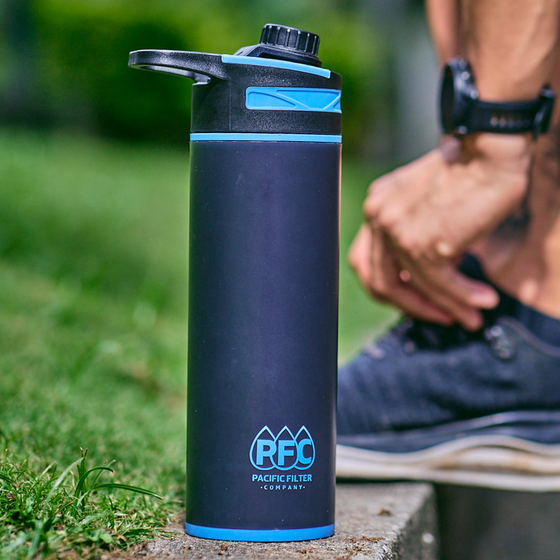
For a PFC Filtered Bottle, check the instructions for the model and replacement cartridge before disassembling or cleaning it. If you are unsure, send us a photo of the part you need to identify.
If you notice lingering odors or stains
Stop using the bottle and check hidden areas. Follow the cleaning or disinfecting procedure approved by the manufacturer.
If you cannot reach a part, remove the dirt, or resolve the odor, ask about replacing it. Do not try to compensate by adding flavors to the water.
When using cleaning products, follow their labels and do not mix bleach with other cleaners or disinfectants. Source: CDC
Get ready for the next refill
You can link washing your bottle to the end of your day: empty it when you get home, wash it with the dishes, and leave it to dry for tomorrow.
At PFC, we want you to enjoy your water from the moment you pour it to the last sip. A well-cared-for container is part of that experience.
Need guidance on your PFC bottle or replacement cartridge? Browse our catalog and tell us which model you use.
Free your water with PFC.
 Aquon by PFC