
Watering Plants with Tap Water: What to Look for in the Leaves
You bought a plant that looked perfect in the store. You water it when needed, give it good light, and still the leaf tips turn brown.
Before changing the pot or soil, it is worth checking something more basic: the water you use.
It does not explain every case, but it can be a factor.
What to look for in the leaves
Some signs may relate to water quality rather than watering alone:
- Dry, brown tips on leaves that otherwise look healthy.
- Scorched edges spreading toward the center.
- A whitish crust on the soil surface or pot rim.
- White marks on leaves after misting.
The last two point to salt buildup. The first two can have several causes, including humidity, so avoid jumping to conclusions.
The more sensitive plants
Not every plant reacts the same way. Those with thin, delicate leaves often show more signs: ferns, calatheas, marantas, dracaenas, and some indoor palms.
Pothos and snake plants, on the other hand, usually tolerate more.
If you have several plants and only a few show the problem, that pattern is already a clue.
The advice to let water stand
It is common advice among plant owners: fill the watering can and leave it uncovered for a few hours before watering.
The idea is to allow some chlorine to dissipate. It is a simple, free approach that many people find useful.
One distinction matters: not all disinfectants behave the same way when water stands. If your supplier uses chloramine rather than free chlorine, standing water does not produce the same result. Ask your supplier which treatment it uses. Source: CDC
That helps explain why the advice works for some people and not others.
Water thoroughly and let it drain
Whatever water you use, one practice helps with salt buildup: water until it runs out of the drainage holes rather than giving frequent small sips.
Water passing through all the soil carries away some of the buildup. Shallow watering can leave salts accumulating near the surface.
Always empty the saucer afterward. Leaving a pot standing in water is a separate—and common—problem.
The two-plant comparison
If you want to see whether water is the variable, make the comparison meaningful.
Take two plants of the same species with similar pots and light conditions. Water one with tap water and the other with filtered water for a few weeks.
Watch the new leaves, not the ones already damaged: a brown tip will not recover, but new growth can show whether anything changed.
Where a filter fits
If you already want filtered drinking water, a pitcher or kitchen filter can also make watering convenient.
A device designed to reduce chlorine, taste, and odor addresses that specific goal. When comparing models, check what they claim to reduce and under which conditions, beyond a general mention of activated carbon. Source: CDC
Let us be clear: a household drinking-water filter is not designed as gardening equipment. If your plants are the main reason, letting suitable water stand or collecting rainwater may be a more sensible option than buying a filter.
We would rather say that plainly than suggest a purchase for a problem that may not need one.
If you already have a filter at home
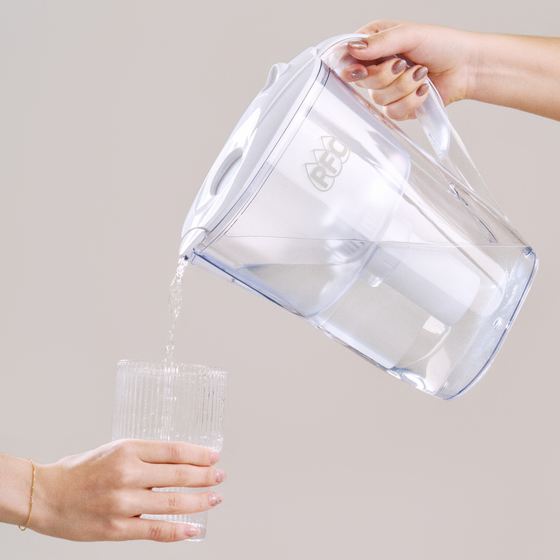
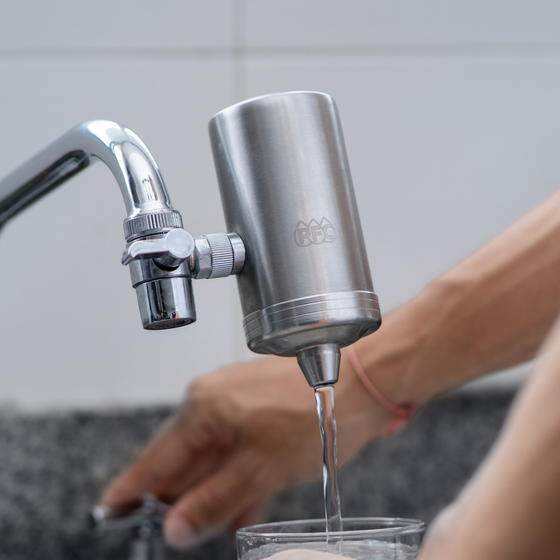
A PFC Filtered Pitcher in the fridge or a PFC Faucet Filter in the kitchen makes filling the watering can as convenient as filling a glass.
Remember that watering volume counts toward cartridge use just like the water you drink. If you water many plants, you may need more frequent replacements.
Filter media have a limited lifespan and need replacement according to the manufacturer’s instructions. Source: EPA
Before blaming the water
Check the basics too, because they often explain more cases:
- Overwatering or underwatering.
- Direct sunlight where it is not suitable.
- Very low humidity caused by air conditioning.
- Excess fertilizer accumulated in the soil.
- A pot without effective drainage.
Water is one variable, not the only one.
Want filtered water in the kitchen with convenient plant watering along the way? Explore PFC filters and tell us how you use water at home.
Free your water with PFC.
 Aquon by PFC