
How to Help Children Drink More Water at Home
They come home from school feeling hot, open the fridge and ask for juice. You serve water, they leave a half-full glass on the table, and ten minutes later they ask for something else.
It is a common scene, and it does not mean you are doing anything wrong.
Children do not think in terms of hydration. They choose what is within reach, what they like and what they see others doing. Working on those three things usually works better than insisting.
Why waiting for them to ask for water is not enough
In young children, thirst does not always arrive in time, especially when they are absorbed in play or the weather is hot.
They also tend to interrupt what they are doing less often than adults. If drinking water means leaving a game, going to the kitchen, asking for help reaching a glass and going back, it often simply does not happen.
That is why it helps to actively offer water at regular points in the day rather than waiting for a request: after school, before going out to play, with meals and before bed.
If you have questions about your child’s particular needs, especially if they are a baby or have a health condition, consult their pediatrician. What follows is advice for organizing your household, not medical instructions.
Make it easy to reach
The most common barrier is physical: the water is somewhere a six-year-old cannot reach without help.
Some simple solutions:
- Keep unbreakable cups in a low drawer, not on a high shelf.
- Have a regular spot where they can serve themselves without asking permission.
- Keep small, filled bottles in the fridge, ready to grab and go.
- If you use a pitcher, choose one they can lift when it is half full.
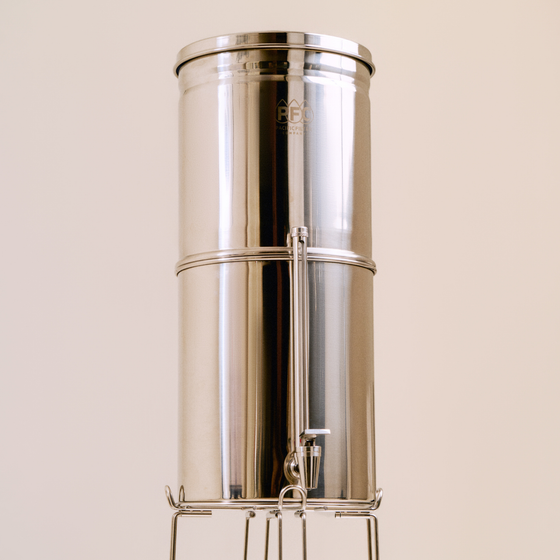
A PFC Dispenser can fit this approach: a fixed, accessible place where everyone at home can serve themselves. Before deciding, check that the surface where you would place it is at a comfortable height for them.
Taste matters more than you might think
A child who says “the water tastes bad” is giving you useful information, not making an excuse. Children are often more sensitive to smells and flavors than adults.
If your home’s water has a noticeable chlorine smell, that may be the real reason they prefer flavored drinks.
A filter designed to reduce chlorine, taste and odor can help with that. When comparing models, look for specific information about what they reduce and under which conditions, rather than relying on a general mention of activated carbon. Source: CDC
Try an honest comparison at home: serve a glass of filtered water and another of unfiltered water and ask which they prefer. Their answer will tell you whether taste was the obstacle.
Ideas that can work without turning it into a negotiation
Avoid rewards and punishments. It works better to make water the normal choice:
- Always have water on the table. Serve it before they sit down, not after they ask for something else.
- A bottle of their own. Let them choose it, put their name on it and take it out with them every day.
- Fruit in water, not juice. A few slices of lemon or cucumber change the experience without turning it into a sugary drink.
- Let them see you drink it. This is the least negotiable part and the most effective.
- Ice. For many children, cold water with ice feels like a different drink from a lukewarm glass.
Take care of the containers they use every day
Children’s bottles and insulated flasks often have lids with spouts, straws or small parts that retain moisture.
Give them the same attention as a drinking glass: take the lid apart, wash each piece and let everything dry completely before putting it away. A bottle that smells bad ends up abandoned in a backpack.
The same applies to the pitcher or dispenser at home: filtration improves the water coming out, but the storage container also needs cleaning and a protective lid. Source: CDC
On very hot or active days
Sports practice, outings, the beach or simply an afternoon playing outside increase fluid loss.
On those days, bring water prepared at home instead of figuring it out on the go. Filling a bottle before leaving means you do not have to depend on whatever is available along the way.
If the water comes from a filter, remember that the cartridge has a service life and must be replaced according to the manufacturer’s instructions so the device continues working as expected. Source: EPA
Start with one change
You do not need to do everything at once. Choose the time of day when they drink the least water and focus on that.
If it is after school, have something ready in the fridge before they arrive. If it is the morning departure, prepare the bottle the night before.
The habit grows through availability, not insistence.
Is the taste of water holding your family back? Explore PFC’s options and tell us what a day in your home looks like. We can help you find the best fit.
Free your water with PFC.
 Aquon by PFC