
Water and Exercise: How to Plan Your Hydration Before, During, and After
You head out for a run at six in the morning without having had anything to drink. Or you arrive at the gym with a half-full bottle you bought yesterday that already tastes like warm plastic.
You plan your workout. Water rarely gets the same attention.
Yet it is one of the easiest things to organize: it simply takes a decision the night before.
Before: arrive hydrated, rather than starting to catch up
Hydration for your workout does not begin during the workout. It starts in the hours beforehand.
If you arrive with a dry mouth and have not had water since the night before, you are starting at a disadvantage. Drinking large amounts all at once at the last minute does not make up for it.
A reasonable routine:
- Drink water when you wake up, before coffee.
- If you exercise in the afternoon, spread your water intake throughout the day instead of leaving it until the end.
- Fill your water bottle the night before and leave it next to your clothes or keys.
That last point seems minor, yet it makes a big difference. A full bottle by the door goes with you; an empty one in the sink gets forgotten.
During: regular sips instead of waiting for thirst
Thirst is a useful signal, but during exercise it can arrive late, especially in heat and humidity.
Taking small amounts regularly throughout the session works better. Drinking a lot at once is often uncomfortable and ends up interrupting your rhythm.
If you exercise outdoors in the local climate, allow for the heat: you may sweat more than you realize because humidity makes it harder for sweat to evaporate, leaving it on your skin.
About sports drinks and electrolytes: what is appropriate depends on the duration, intensity, and your personal circumstances. If you exercise for long periods, have a health condition, or take medication, discuss this with a healthcare professional or sports nutritionist instead of following what the rest of the group does.
After: replenish without overthinking it
When you finish, the most practical approach is to resume drinking water gradually throughout the rest of the day, rather than finishing a liter in five minutes.
Everyday signs you can observe:
- The color of your urine in the following hours.
- A headache or fatigue that seems disproportionate to your workout.
- How much water remains in your bottle when you finish.
That last detail is the most honest of all. If your bottle comes back almost full session after session, the problem is not how much you take with you.
Your water bottle needs attention too
A container that spends the day closed, damp, and at room temperature needs more care than a drinking glass.
Take the lid apart, wash each piece, and let everything dry completely before storing it. Mouthpieces, straws, and screw threads are the parts most often overlooked.
For water you store or carry, use clean, covered containers suitable for that purpose, avoid putting hands or utensils inside, and keep them out of the sun. Source: CDC
If taste is why you buy bottled water
Many people who exercise end up buying bottled water because they do not like the water at home, rather than because it is more convenient.
If that sounds familiar, a filter designed to reduce chlorine, taste, and odor may change the equation. When comparing models, check what each one claims to reduce and under what conditions, beyond a general mention of activated carbon. Source: CDC
If a product claims certification for taste and odor, the usual reference is NSF/ANSI 42. Check the exact model and the reductions covered. Source: NSF
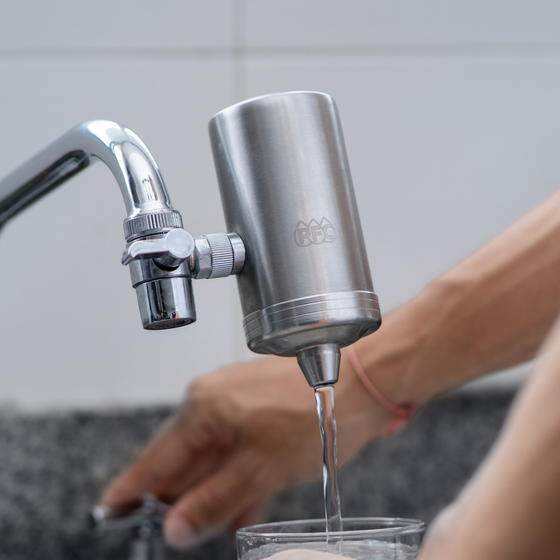
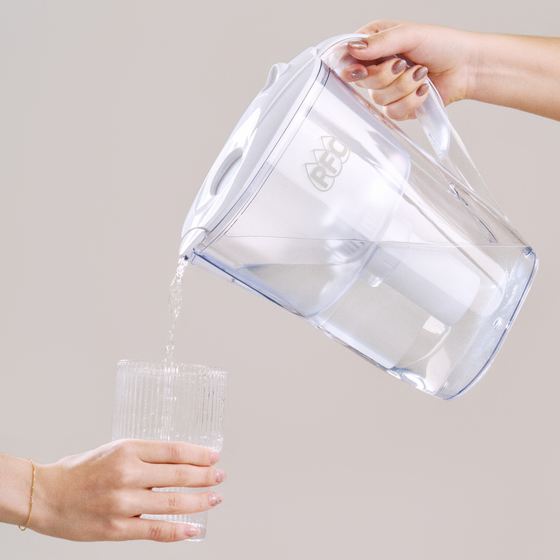
To fill bottles before heading out, a PFC Faucet Filter serves the exact spot where you need it. If you prefer your water already cold, a PFC Filtered Pitcher in the refrigerator fills that role better.
Calculate what you spend
If you exercise four times a week and buy a bottle each time, that adds up to more than two hundred bottles a year.
Putting a number on that is often more convincing than any argument. When comparing it with a filter, include the cost of replacement cartridges throughout the year, not just the system itself.
Remember that filter media have a limited service life: replace them according to the manufacturer's instructions so they keep working as intended. Source: EPA
One change to get started
Choose your next workout and prepare your water bottle the night before. That is all.
If it works for a week, you have already solved the hardest part. The rest is fine-tuning.
Want to stop buying bottles before your workout? Explore PFC filters and tell us about your routine. We will help you consider which option fits.
Free your water with PFC.
 Aquon by PFC